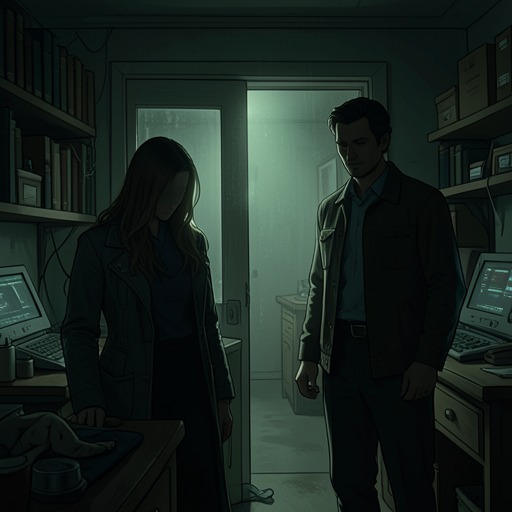
Drayton kills the rape perpetrator at Lake Tahoe
Insatiable Box Set: Books 1-4Drayton kills the rape perpetrator at Lake Tahoe in an act that turns Adrienne’s buried trauma into an immediate and dangerous confrontation with the outside world. The killing follows a chance recognition in a crowded hotel rather than a planned public accusation: Adrienne hears the voice of one of the men who assaulted her during college, identifies him to Drayton, and is left trembling while he conceals his anger and prepares to act. His response is both protective and perilous, because the private revenge that gives shape to Adrienne’s suffering also places the Samsa family under political and legal scrutiny.
The Recognition at the Hotel
Adrienne’s trauma has been suppressed for a year. After some of Paul’s fraternity brothers entered her bedroom while Paul was passed out in another room, she could not remember their faces or names, but she retained the voices. The assault was minimized by Paul and her parents as an “incident,” partly because the attackers’ families were rich and powerful. Adrienne was subsequently told that she could never have children, and Paul insisted that the subject should never be discussed again, binding her future marriage to a silence she had never freely chosen.
That silence breaks at the hotel near Lake Tahoe. Drayton brings Adrienne into a five-star hotel crowded with people attending a technology convention and chooses a penthouse suite because of the noise. In the elevator, another man addresses Drayton by the Samsa name and mentions possible dealings with Wilder; a second, drunken voice refers to a party in Lake Tahoe. Adrienne grips Drayton’s hand and quietly identifies the speaker as one of the men who raped her. The men leave on the fifth floor laughing and drinking, while Adrienne remains fixed on the voice she has never forgotten.
From Witness to Retaliation
Once inside the suite, Adrienne rushes into the room in terror. Drayton helps her undress, shower, dress, and lie down, and he manages to get only clam chowder and specially prepared bread into her before she closes her eyes. As she sleeps, the memory returns through physical distress: she grimaces, moans, and relives the assault while Drayton holds and rocks her. His care creates a temporary refuge, but it does not dissolve the violence that has resurfaced. The hotel has converted a remembered crime into a present danger, and Adrienne’s body becomes the place where the past reappears.
After leaving Adrienne asleep, Drayton slips out into the night beneath the full moon. The narration emphasizes the contrast between his quiet caretaking inside the suite and his unexplained departure into darkness. When Adrienne wakes, he is gone; she looks toward the moon associated with her first meeting with Wilder and then sees Drayton return breathing hard, shirtless, with ripped and bloody pants. His appearance confirms that the night has not been an ordinary hunt or an attempt merely to relieve the tensions of the full moon. The event is disclosed first through Adrienne’s frightened observation and only afterward through the family’s discussion of what Drayton has done.
The Family Learns What Happened
Back at the Samsa household, Drayton states plainly that he has killed a man. Wilder and Lycell immediately try to send Adrienne away, calling the matter family business, but she refuses to be treated like a child. She explains that she told Drayton why she believed she could not have children, that the assault was committed by several of Paul’s friends, and that the voice in the hotel allowed her to identify one of them. Her account changes the meaning of Drayton’s bloodstained return: he did not kill an unknown stranger during a random hunt, but pursued the man Adrienne recognized as one of her attackers.
The family’s reaction reveals a conflict between concealment, protection, and justice. Wilder is concerned not only with the death but with the investigation surrounding it. The victim is the son of a state senator in the district, and the senator is examining hotel guests while using surveillance footage to find the killer. Wilder admits that he had initially read the news without connecting the death to Adrienne or the hotel, but now faces a meeting with the senator and must determine how to protect the family from the consequences of Drayton’s retaliation.
Revenge, Law, and the Family Order
The killing also exposes the competing legal systems that govern the Samsa family. In the human world, the death of a state senator’s son triggers an investigation, surveillance review, and a demand that Wilder use his influence to identify the person responsible. Within the werewolf order, however, Drayton’s act is understood through a harsher code of protection, loyalty, and retaliation. Wilder is the Alpha male, Adrienne is his mate, and the assault against her has entered the family’s private jurisdiction even though the original crime was committed by human men and suppressed by human social power. Drayton’s revenge therefore does not settle the past; it transfers the danger from Adrienne’s hidden trauma to the Samsa household, where Wilder must negotiate with the senator while concealing both the killer’s identity and the family’s supernatural nature.
The Killing’s Wider Stakes
The killing also exposes the competing legal systems that govern the Samsa family. In the human world, the death of a state senator’s son triggers an investigation, surveillance review, and a demand that Wilder use his influence to identify the person responsible. Within the werewolf order, however, Drayton’s act is understood through a harsher code of protection, loyalty, and retaliation. Wilder is the Alpha male, Adrienne is his mate, and the assault against her has entered the family’s private jurisdiction even though the original crime was committed by human men and suppressed by human social power. Drayton’s revenge therefore does not settle the past; it transfers the danger from Adrienne’s hidden trauma to the Samsa household, where Wilder must negotiate with the senator while concealing both the killer’s identity and the family’s supernatural nature.
The immediate aftermath also redirects the family’s plans for Adrienne. She tells Wilder that, once she has given birth to Lycell’s pups, she intends to marry Drayton and needs a break from the two brothers. Wilder responds by proposing that Adrienne and Drayton go to Hawaii for a month, until the investigation can be calmed. The proposed retreat is therefore more than a honeymoon or domestic arrangement: it is a protective removal from Lake Tahoe after the killing has made the family vulnerable to public scrutiny. Adrienne’s pregnancy, the brothers’ competing claims, and the threat posed by the senator’s investigation become entangled in the same decision, showing how personal care, family authority, and concealment operate together after Drayton’s retaliation.
The event’s deepest reversal lies in its movement from silenced victimization to contested agency. Adrienne does not confront the perpetrator in court, and the narrative does not give her a conventional public hearing; instead, recognition begins with a voice, passes through her private disclosure to Drayton, and culminates in his unilateral action. Her testimony makes the killing intelligible, but Drayton’s response also demonstrates the danger of a protective order that acts on her pain without placing the final decision in her hands. The perpetrator’s death confirms that the buried assault has consequences beyond Adrienne’s memory, yet it leaves unresolved the conflict between human accountability, werewolf law, and the family’s determination to control what becomes known.
Consequences, Concealment, and Agency
The killing’s immediate consequence is not closure but displacement. The death draws the attention of a state senator whose son has been killed, brings hotel guests and surveillance footage into the investigation, and places Wilder under pressure to use his influence to locate the murderer. The family must therefore protect Drayton without exposing the circumstances that led to the killing or revealing the supernatural order behind its response. Wilder’s authority as Alpha becomes practical rather than ceremonial: he must manage the senator, preserve the family’s secrecy, and contain the political danger created by an act that was emotionally personal but publicly consequential.
The same crisis reshapes Adrienne’s domestic future. She announces that after giving birth to Lycell’s pups she intends to marry Drayton, while also asking for distance from the brothers. Wilder’s proposal that Adrienne and Drayton spend a month in Hawaii functions as both a response to the investigation and an attempt to remove them from the immediate danger surrounding Lake Tahoe. Pregnancy, marriage, family hierarchy, and concealment become inseparable. The journey is not simply a romantic retreat: it is a protective maneuver devised after Drayton’s revenge has made the family vulnerable to scrutiny.
The event’s final tension lies in the difference between recognition and control. Adrienne’s voice-based identification gives the hidden assault a name and makes Drayton’s action intelligible, but she does not choose the form that justice takes. Her testimony converts private suffering into family knowledge; Drayton converts that knowledge into lethal retaliation; and Wilder must then translate the retaliation into a crisis of law and secrecy. The perpetrator’s death confirms that the suppressed assault cannot remain sealed within the past, yet it does not resolve the competing claims of human accountability, werewolf protection, and Adrienne’s own authority over what should happen to the trauma she survived.